
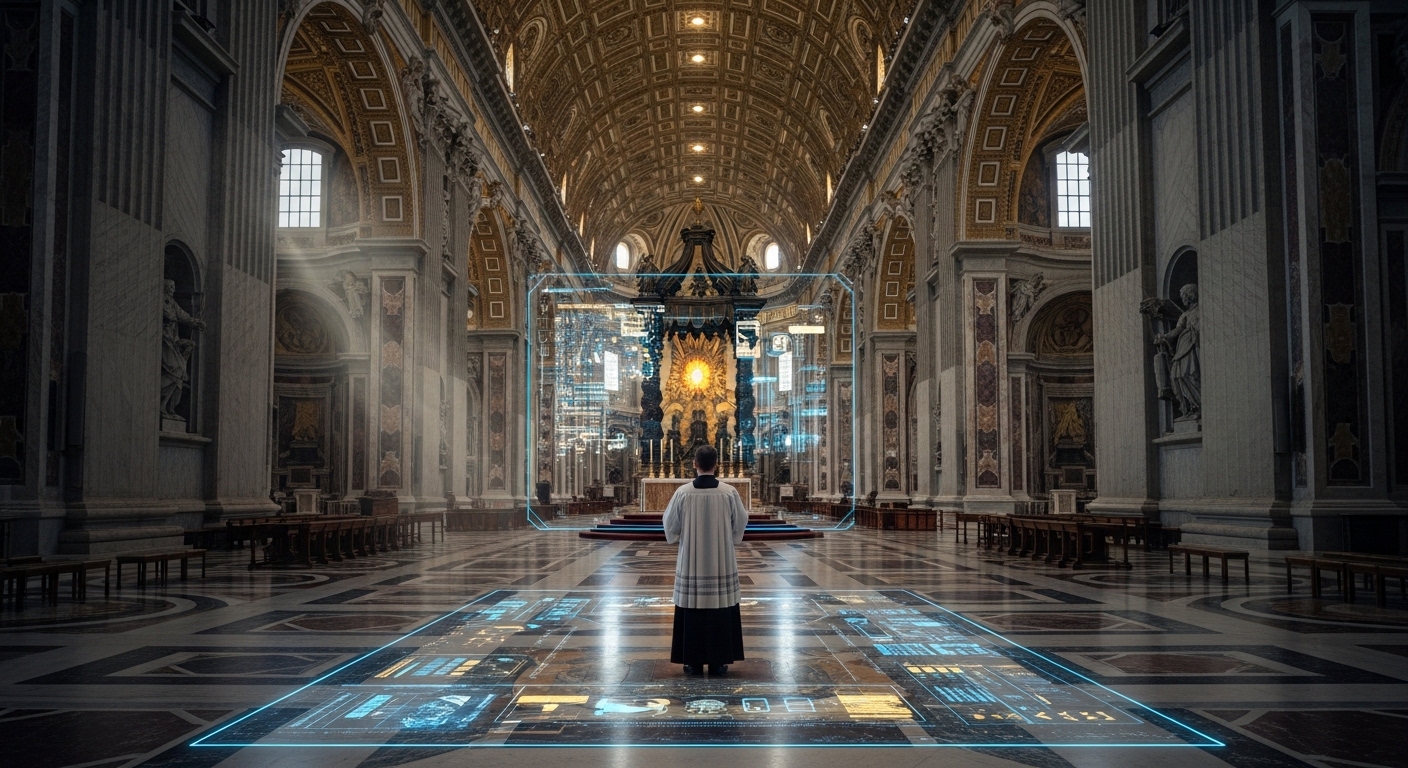
On September 29, 2025, the Vatican released a directive that would fundamentally alter the relationship between the clergy and the keyboard. The Vatican Digital Diocese Conflict emerged not from a dispute over scripture, but from a struggle over the sovereign ownership of the digital "voice" and the authority of the virtual parish. Pope Leo XIV, who has himself been the target of sophisticated AI deepfakes since his election, has moved to centralize the Church’s online presence, creating a tension that feels less like a theological debate and more like a corporate merger gone wrong.
The struggle for the digital pulpit
The conflict centers on a new ecclesiastical framework intended to govern "influencer priests" and independent digital ministries. For years, charismatic figures have built massive followings on platforms like TikTok and YouTube, often operating outside the traditional oversight of their local bishops. The Vatican’s push to consolidate these voices into a unified "Digital Diocese" has met fierce resistance from those who argue that the spirit of evangelization cannot be tethered to a centralized server in Rome.
In February 2026, the resignation of Father Alberto Ravagnani, a prominent Italian "influencer priest," underscored the human cost of this bureaucratic tightening. When the Vatican’s Dicastery for Communication demanded that digital content meet strict new "Media and Artificial Intelligence Literacy" standards, it wasn't just about the message; it was about the medium. The Church is discovering that the algorithm does not respect the apostolic succession.
The ghost in the cathedral
At the heart of the Vatican Digital Diocese Conflict is the rise of Catholic AI models like Magisterium AI and the creation of "digital twins" of sacred spaces. While the Vatican has collaborated with tech giants to create a 3D replica of St. Peter’s Basilica, there is a growing fear that the simulation is beginning to replace the sacrament. Traditionalists warn that a "digital diocese" risks turning the mystery of faith into a data-mining exercise, where the "face and voice" of the person—themes central to the 2026 World Communications Day—are lost to biochemical algorithms.
The controversy reached a boiling point when several German and French dioceses openly defied the new digital mandates, citing the need for "inculturation" in the digital world. They argue that a top-down approach from Rome ignores the specific needs of online communities that have formed their own unique, albeit uncanonical, identities. This is not merely a technical glitch; it is a crisis of identity for an institution that prides itself on being "universal" in a world that is increasingly fragmented into personalized echo chambers.
A house divided by data
The Holy See now finds itself in a precarious position. By attempting to police the digital frontier, it risks alienating the very demographic it seeks to engage: the youth who live entirely within these digital borders. The Vatican Digital Diocese Conflict illustrates the impossibility of imposing a medieval hierarchy on a decentralized network. When the Pope speaks of "preserving human voices," he is fighting against a tide of synthetic reality that the Church itself helped unleash by stepping into the cloud.
As we watch this play out, the question remains whether the Church can survive as a physical community in a world that prefers the convenience of the avatar. The conflict is a reminder that while technology can bridge distances, it can also hollow out the centers of our most sacred institutions. Rome may own the servers, but the souls of the faithful are increasingly hosted elsewhere.


Comments
0 commentsLeave a Comment
No comments yet. Be the first to share your thoughts!