
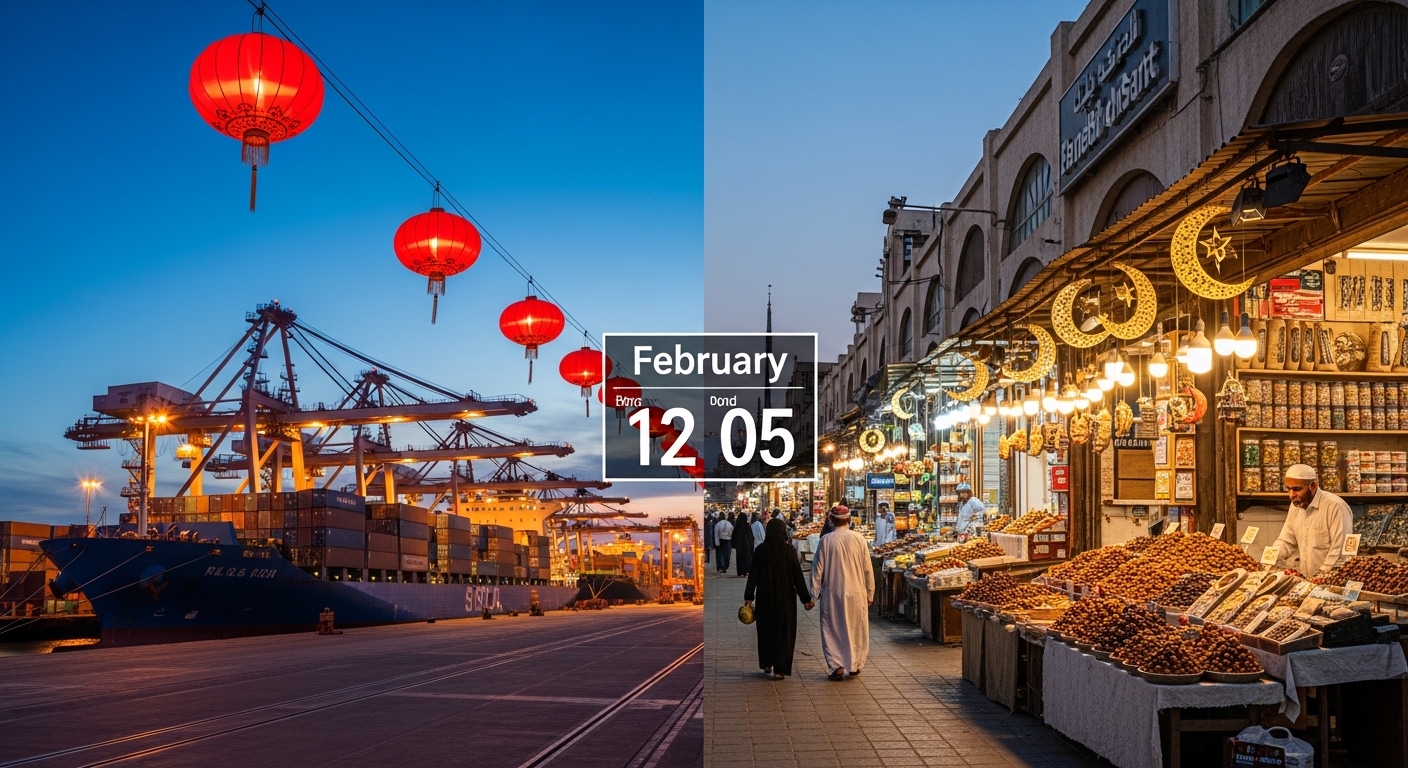
February 17 marks the beginning of a market event that hasn't been seen with such intensity in decades. The Great Ramadan and Lunar New Year Convergence is no longer a theoretical risk for procurement officers; it is a live crisis affecting the flow of goods from Shanghai to Dubai and Los Angeles. While the Year of the Horse traditionally signals a pause in Chinese manufacturing, its synchronization with the Islamic holy month is creating a structural bottleneck in global trade.
The Double-Sided Supply Squeeze
The math for global logistics is currently unforgiving. China’s official holiday runs from February 15 to February 23, effectively mothballing the world’s primary factory floor. Simultaneously, Ramadan is projected to begin around February 18 or 19. In markets like Malaysia, Indonesia, and the Gulf, this means a surge in consumer demand for food and apparel is hitting exactly when the world’s largest exporter has stopped shipping.
Data from major carriers suggests that over 100 "blank sailings"—cancelled voyages—are scheduled for February. This represents a 38% increase in capacity reduction compared to standard seasonal projections. Shippers who failed to secure space by mid-January are now seeing spot rates for ocean freight climb 20% to 30% above 2025 levels.
Inventory Depletion and the Restocking Trap
Retailers in the Middle East and Southeast Asia are facing a "buy-it-now-or-never" scenario. Because Ramadan begins almost exactly as Chinese ports go dark, the window for restocking perishable goods and festive apparel has effectively closed. This leaves regional distributors relying on inventory that was shipped in December, which is already showing signs of depletion.
Logistical Gridlock in Southeast Asia
In hubs like Kuala Lumpur and Singapore, the impact is felt most acutely. Businesses are managing a "dual-peak" demand cycle. While Chinese families are purchasing reunion dinner staples, Muslim families are simultaneously stocking up on Ramadan essentials. This has led to a 3,000% surge in online search volume for festive goods, outstripping the capacity of local last-mile delivery networks.
The operational reality on the ground is equally challenging. Customs departments and port authorities in Muslim-majority countries often reduce working hours to 5 or 6 hours per day during the fast. When this reduction is applied to the backlog created by the Chinese shutdown, the result is a shipping delay that experts predict will not be fully cleared until late April.
Market Logic: Winners and Losers
The clear losers in this convergence are small-to-medium enterprises (SMEs) that lack the capital to frontload inventory or the volume to negotiate priority with carriers. Conversely, large-scale retailers that pivoted to "China Plus One" strategies—sourcing from Vietnam or India—are finding a slight reprieve, though even these routes are congested as everyone tries to bypass the primary China-outbound lanes.
As we observe the fallout, it is clear that the global supply chain is still too rigid to handle major lunar-driven overlaps. For the C-suite, the lesson is binary: diversify your sourcing geographically or keep enough cash on hand to survive the premium pricing of a synchronized global shutdown.



Comments
0 commentsLeave a Comment
No comments yet. Be the first to share your thoughts!