
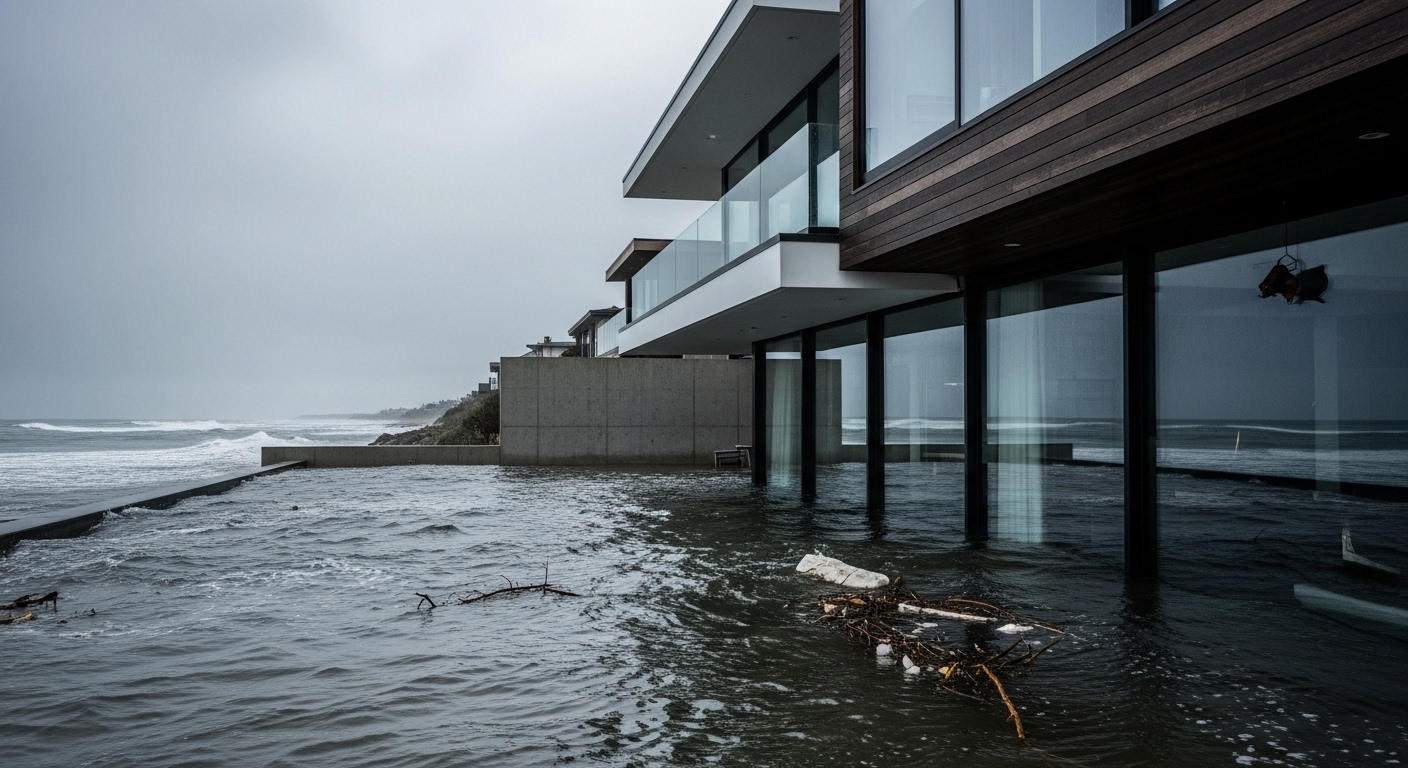
The New Geometry of Risk
In the first week of February, the World Meteorological Organization reported that record-breaking winter storms and unprecedented rainfall have displaced over 650,000 people in Mozambique alone. Based on current global reporting for, the following is the most significant trending topic regarding natural disasters: the systematic failure of our predictive models to account for the "compounding effect" of simultaneous catastrophes.
We are no longer dealing with isolated events that allow for a season of recovery. Instead, the global landscape is characterized by what risk analysts call "secondary perils"—severe thunderstorms, flash floods, and wildfires—that are now matching the destructive force of major hurricanes. In 2025, severe convective storms actually surpassed tropical cyclones as the costliest global peril, generating $61 billion in insured losses from 61 separate events. This isn't just a statistical anomaly; it is the sound of the world’s financial engine grinding against a reality it wasn't built to sustain.
The Retreat of the Insurers
The quiet tragedy of the current climate moment is not just the physical destruction of property, but the evaporation of the "protection gap." While the United States remains the epicenter of insured losses—accounting for 81% of the global total in recent months—the real story lies in the places where the money is simply stopping. In the Pacific islands and parts of Southeast Asia, insurance penetration is falling as premiums skyrocket beyond the reach of local economies.
What we are seeing is a fundamental reorganization of human geography. When a reinsurance giant like Swiss Re or Aon adjusts its risk appetite, the ripple effects are felt in the mortgage rates of a family in Florida and the infrastructure budget of a city like Jakarta. We have relied on the illusion that risk could be infinitely diversified and sold off in pieces. But when the entire planet is "stormy," there is nowhere left to diversify to.
The Infrastructure Paradox
Our cities are built on a set of assumptions about the "100-year flood" that have been rendered obsolete by the sheer volume of water currently moving through the atmosphere. In Aomori, Japan, snow depths recently reached 1.7 meters—the highest in 40 years—straining grids designed for a different century. In the Mediterranean, "Arctic hurricanes" or medicanes are threatening coastal infrastructure that was never reinforced for such violence.
The paradox is that our most valuable assets are often located in our most vulnerable places. From the silicon hubs of Taiwan to the financial districts of London and New York, the proximity to water is both an economic necessity and a terminal liability. We are effectively playing a game of musical chairs with the climate, and the music is beginning to skip.
Beyond the Spreadsheet
The cultural critic must look past the $260 billion in total economic losses to see the erosion of the "future-tense." To live in 2026 is to exist in a state of constant atmospheric anxiety. The "natural" in natural disaster has become a misnomer; these are now human-amplified events, a feedback loop where our carbon-heavy past meets our precarious present.
We are entering an era of "managed retreat," not just of people from coastlines, but of capital from the concept of permanence. The sturdy brick-and-mortar reality of the 20th century is being replaced by a more fluid, temporary mode of existence. We are learning, painfully and expensively, that the Earth does not recognize our property lines or our actuarial tables.
Frequently Asked Questions
What is meant by "secondary perils" in natural disasters?
Secondary perils refer to smaller-to-medium-sized events like wildfires, flash floods, and hailstorms. While they were historically seen as less impactful than "primary" events like major hurricanes, they are now causing cumulative financial damage that exceeds traditional disasters.
Why is the $100 billion insured loss mark significant?
Surpassing $100 billion in insured losses for six consecutive years indicates a "new normal" where the global insurance industry can no longer rely on quiet years to offset the costs of catastrophic ones, leading to higher premiums and withdrawn coverage.
Which regions are currently most affected by this trend?
The United States remains the leader in insured losses due to high property values and frequent convective storms, but Southern Africa (Mozambique, Malawi) and Southeast Asia are seeing the highest human toll and widening protection gaps.


Comments
0 commentsLeave a Comment
No comments yet. Be the first to share your thoughts!