
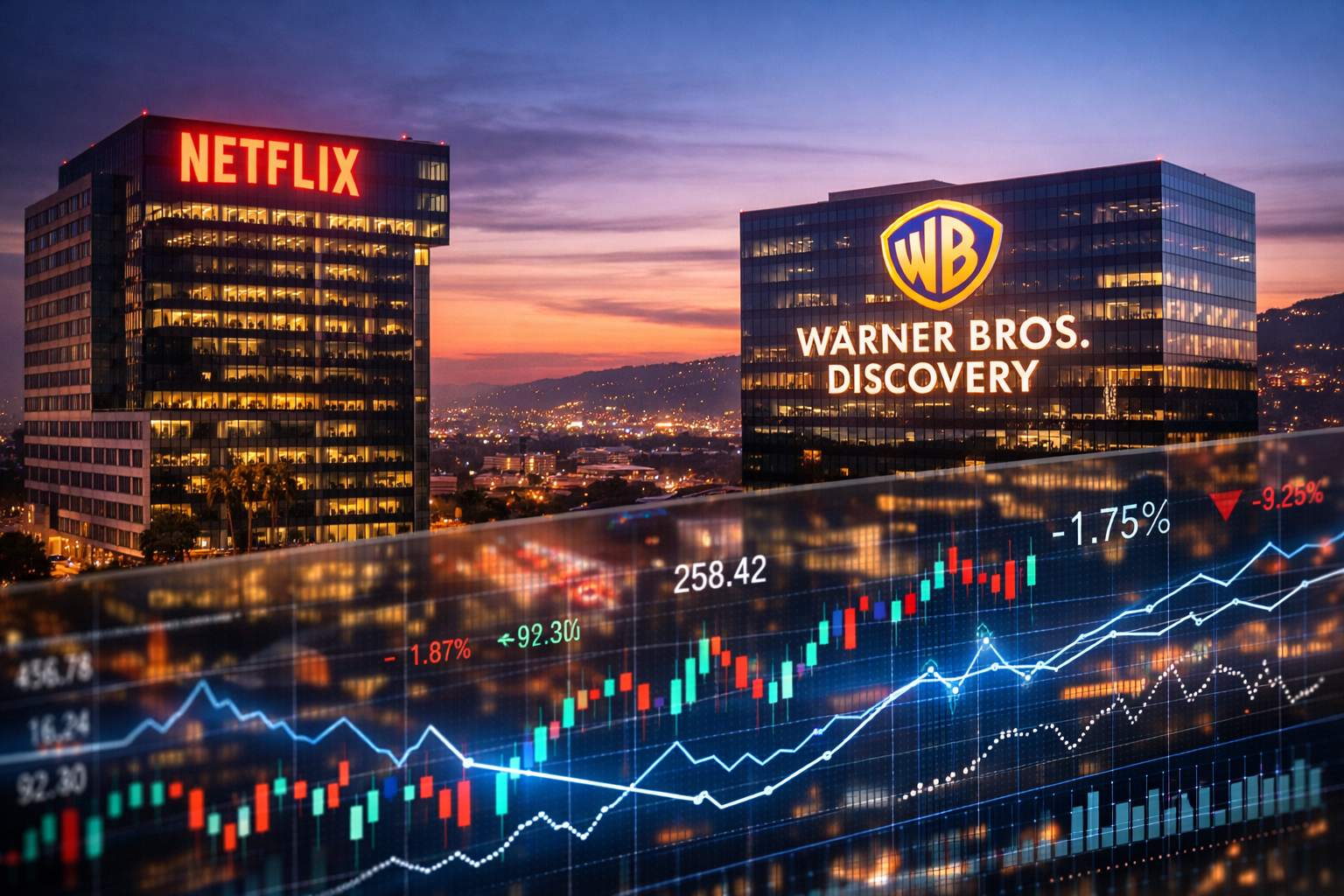
An all-cash offer of $27.75 per share has officially set the floor for the largest media consolidation in a decade. The Netflix Acquisition of Warner Bros. Discovery represents a fundamental shift in the company’s capital allocation strategy, moving away from high-volume original production toward the securement of century-old IP. By fending off a $108.4 billion hostile bid from Paramount Skydance, Netflix has signaled it is ready to absorb the operational weight of a traditional Hollywood studio.
The financial mechanics of the deal
The transaction is structured as a surgical extraction of value. Warner Bros. Discovery will separate its linear cable networks—including CNN, TNT, and HGTV—into a standalone entity called Discovery Global. Netflix is paying for the remaining "premium" assets: the Warner Bros. film and television studios, the Max streaming service, and the entire HBO library. This structure allows Netflix to avoid the accelerating decay of the cable television market while securing 128 million subscribers to add to its own 325 million user base.
Market logic and debt management
While the strategic fit is clear, the price tag has triggered skepticism on Wall Street. Netflix plans to finance the $82.7 billion deal through a combination of cash on hand and roughly $52 billion in new debt. For a company that has spent years refining its free cash flow, this is a massive bet on the efficiency of its ad-supported tier. Management expects the combined entity to reach an operating margin of 31.5% by next year, though integration costs are already projected to drag on short-term earnings.
Regulatory hurdles and the antitrust reality
The Senate Judiciary Committee’s antitrust subcommittee recently grilled co-CEO Ted Sarandos over the implications of such a dominant market share. Regulators are focused on whether a single company controlling nearly 10% of all US television viewing time will lead to price hikes for consumers and less bargaining power for creative talent. Sarandos argued that the deal is a "pro-consumer" move designed to provide a more stable home for high-budget productions that the struggling WBD could no longer sustain on its own.
The theatrical commitment
One of the most surprising terms of the agreement is Netflix’s promise to maintain traditional theatrical windows for Warner Bros. films. Historically, Netflix has favored simultaneous digital releases, but the acquisition of a major studio necessitates a shift in distribution philosophy. Leveraging the Warner Bros. theatrical infrastructure provides Netflix with a new revenue stream and a more prestigious platform for its top-tier talent, potentially ending the long-standing friction between the streamer and the cinema industry.



Comments
0 commentsLeave a Comment
No comments yet. Be the first to share your thoughts!