
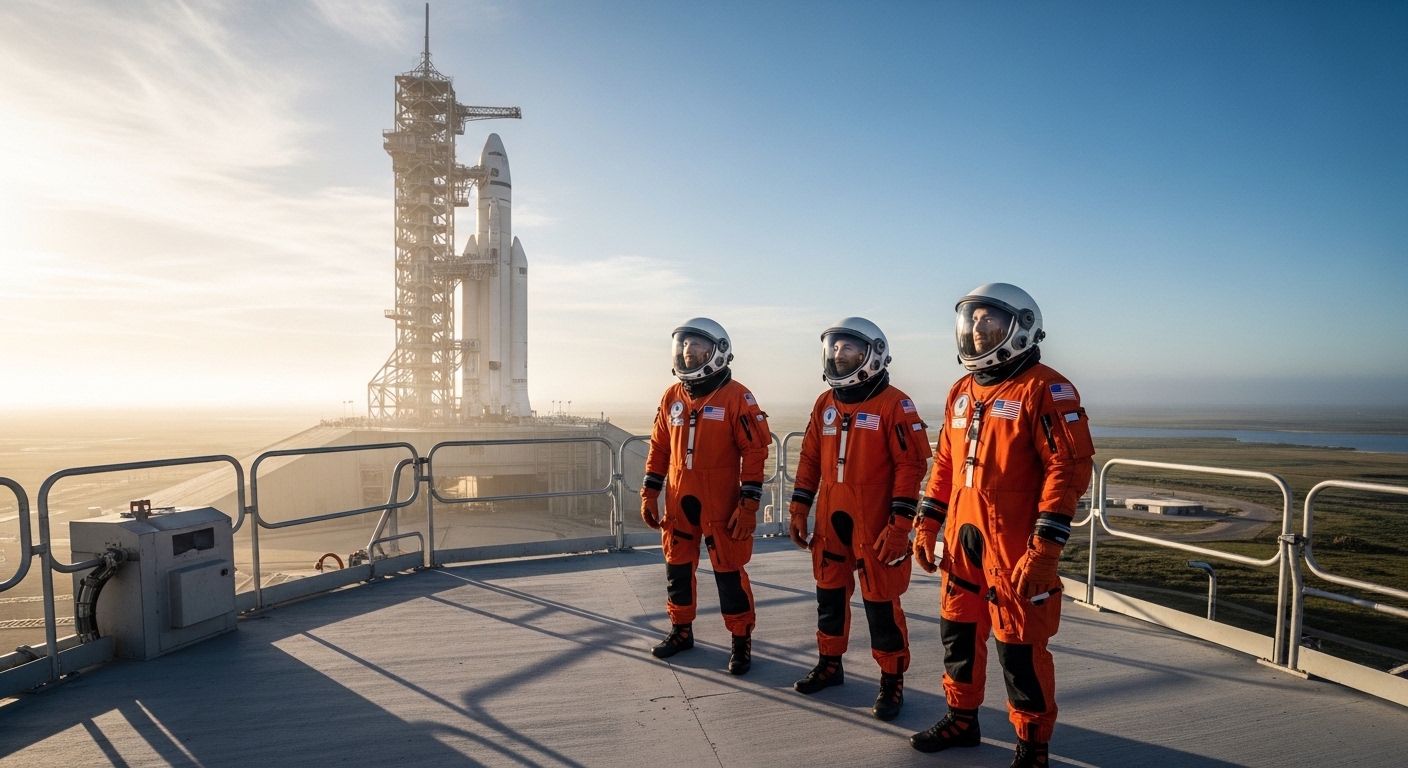
700,000 gallons of liquid hydrogen and oxygen recently sat surging within the belly of a machine designed to defy the very gravity that defines us. On February 2, the world watched a "wet dress rehearsal" at Kennedy Space Center, a quiet but high-stakes performance that ended not with fire, but with the discovery of a microscopic leak. This delay, pushing the launch toward a March window, serves as a grounded reminder of the fragility inherent in The Artemis II Lunar Crew Milestone.
The Ghost of Apollo
To understand why we are doing this now, one must look at the empty space left behind in 1972. When the last bootprints were pressed into the lunar dust, we collectively retreated to the safety of low Earth orbit, content to circle the planet like restless ghosts. This new mission, a ten-day loop around the lunar backside, is not about the Cold War posturing that fueled our first steps. It is a slow, methodical attempt to reclaim a lost sense of vertical ambition.
The crew—Reid Wiseman, Victor Glover, Christina Koch, and Jeremy Hansen—carries a heavier burden than their predecessors. They are not merely pilots; they are symbols of a fragmented global identity. In the tiny, studio-apartment-sized confines of the Orion capsule, nicknamed Integrity, the demographics of the mission speak to a shift in who we allow to represent the "human" in human exploration.
The Weight of the Far Side
There is a specific kind of loneliness waiting for these four. As they swing 4,700 miles beyond the lunar far side, they will experience a total blackout of communication with Earth. In that silence, the mission ceases to be a government contract and becomes a profound psychological experiment. We are sending biological "avatars"—chips containing the crew’s own bone marrow and immune cells—to see how the deep-space radiation environment breaks us down at a cellular level while the astronauts grapple with the isolation of the void.
The technical hurdles, from the retorquing of a hatch valve to the calibration of optical communication lasers, are the prose of the mission. But the poetry lies in the return. When Orion eventually hits the atmosphere at 25,000 miles per hour, it won't just be testing a heat shield; it will be testing whether the modern world still has the stomach for the risks that true discovery demands. We have become a culture obsessed with the digital and the simulated. This milestone is a rare, physical disruption of that trend.
Beyond the Flag
Critics often ask if the billions spent are worth the brief glimpse of a desolate landscape. But the value of the Artemis project isn't found in the rocks brought back; it's found in the friction of the attempt. By choosing to return, we are admitting that the Earth, for all its beauty and turmoil, is no longer enough to contain the scope of human curiosity. We are moving from a sprint to a marathon, trading the temporary glory of a flag-planting for the difficult, grinding work of staying.



Comments
0 commentsLeave a Comment
No comments yet. Be the first to share your thoughts!