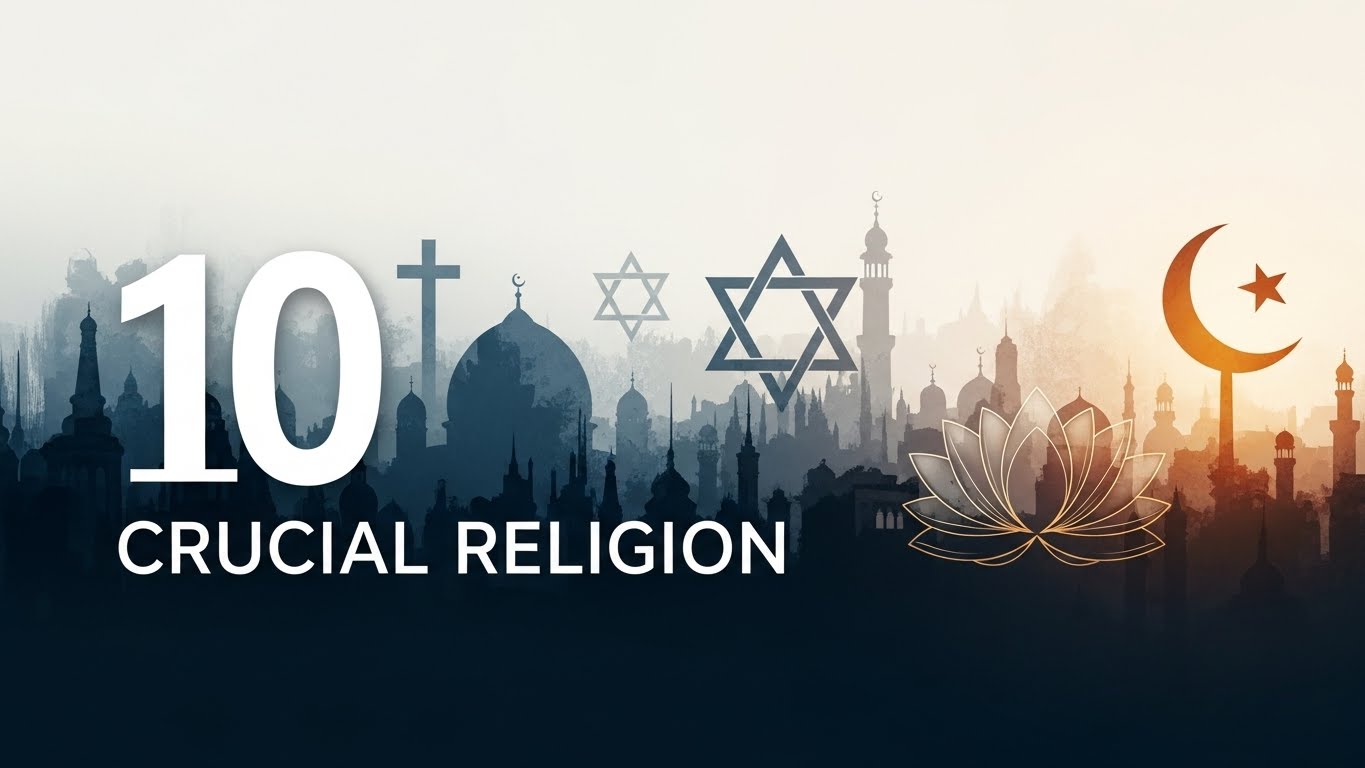
On January 15, 2026, the world witnesses an intricate tapestry of faith and culture, continuously rewoven by technological leaps, geopolitical shifts, and profound societal introspection. From the digital temples of the metaverse to the front lines of climate activism, religious and cultural dynamics are not merely reflecting change but actively driving it. Understanding these ten crucial trends is essential for anyone seeking to comprehend the complex forces shaping our global future.
The Digital Frontier & Evolving Spirituality
The dawn of 2026 finds humanity deeply entrenched in the digital age, a reality that profoundly impacts how faith is practiced, perceived, and even conceived.
AI & Spirituality: Ethical Frontiers and Digital Divinities
The rapid advancement of Artificial Intelligence has moved beyond mere utility, sparking profound questions about consciousness, ethics, and even divinity. As of early 2026, a burgeoning debate surrounds the ethical implications of AI. For instance, the "Aletheia Project," a controversial AI developed by SynapseTech in late 2025, which can generate tailored sermons and spiritual guidance based on user input, has drawn both awe and condemnation. Religious leaders globally are grappling with the concept of AI as spiritual advisors or even as a form of non-human sentience. The Vatican's newly formed Commission for AI Ethics in Faith, established in October 2025, recently released its preliminary guidelines, urging caution against 'digital idolatry' and emphasizing human-centric spiritual development.
"The rise of advanced AI compels us to redefine what it means to be human and, by extension, what it means to have faith," states Dr. Aris Thorne, a leading AI ethicist at the University of Geneva. "We must ensure these technologies serve humanity's spiritual well-being, not diminish it."
Digital Sacred Spaces: The Metaverse & Beyond
The concept of a physical house of worship is continually being augmented, and in some cases, redefined by digital sacred spaces. As of January 2026, platforms like 'MetaFaith' and 'SanctuaryVR' are hosting millions of users globally. These immersive environments offer virtual pilgrimages, communal prayer services in stunning digital cathedrals, and interactive theological discussions. The Church of England's "Project Ascension" recently reported that over 10% of its youth engagement now occurs exclusively within its bespoke metaverse chapel. While questions persist about the authenticity of virtual community, these platforms offer accessibility and a sense of belonging to those geographically isolated or physically limited.
Faith, Crisis, and Activism
Religious and cultural groups are increasingly at the forefront of responding to global crises, from environmental degradation to geopolitical tensions.
Climate Change: Religious Environmentalism Takes Center Stage
As the effects of climate change intensify, religious communities are mobilizing for environmental justice with unprecedented urgency. The "Faiths for Future" summit held in Nairobi in November 2025 saw interfaith leaders issue a powerful joint declaration, calling for immediate, decisive action on carbon emissions and sustainable development. In Bangladesh, coastal Muslim and Hindu communities, aided by international faith-based NGOs, are implementing innovative climate-resilient farming techniques and early warning systems. Reverend Dr. Lena Khan, a prominent advocate from the World Council of Churches, emphasizes, "Caring for creation is not just an ethical imperative; it's a spiritual one, deeply rooted in nearly every major faith tradition."
Geopolitics & Religious Nationalism: A Volatile Nexus
The interplay between geopolitics and religious nationalism remains a significant flashpoint globally in early 2026. In Eastern Europe, the ongoing conflict continues to see religious rhetoric used by both sides, fueling divisions and complicating peace efforts. Similarly, in parts of Southeast Asia and Sub-Saharan Africa, localized conflicts are exacerbated by ethnic and religious identities, with extremist groups exploiting grievances. The United Nations Special Envoy for Religious Freedom recently concluded a fact-finding mission to the contested regions, highlighting the urgent need for inclusive governance and inter-communal dialogue to de-escalate tensions and counter religiously motivated violence.
Reproductive Rights & Faith-Based Advocacy
Following a series of landmark legal rulings and evolving national policies, the landscape of reproductive rights continues to be shaped by faith-based advocacy on both sides of the debate. In the United States, several states have seen new legislation proposed as of January 2026, often framed by differing interpretations of religious freedom and moral obligation. Globally, organizations like "Catholics for Choice" and the "Evangelical Network for Life" are actively campaigning, influencing public opinion, and engaging in direct legislative lobbying. This contentious issue remains a significant cultural battleground, challenging established norms and forcing ongoing societal dialogue about personal autonomy and moral frameworks.
Shifting Demographics & Inner Worlds
Changing demographics and a renewed focus on individual well-being are transforming the spiritual landscape.
The "Nones" & Redefining Spirituality
The trend of the "nones" – individuals who identify as religiously unaffiliated – continues its upward trajectory globally, particularly among younger generations. The latest Pew Research Center report, "Global Religious Landscape 2025-2026," published last month, indicates that in Western countries, over 35% of adults under 30 now identify as 'none.' This doesn't necessarily mean a rejection of spirituality; rather, it often signifies a move towards personalized, eclectic spiritual practices, often incorporating elements from various traditions, secular humanism, or a focus on personal well-being and social justice outside traditional institutional frameworks.
Mental Health Integration: Faith's Healing Embrace
There is a growing global recognition of the crucial link between mental health and faith. In 2026, more religious institutions are actively integrating mental health support services into their communities. The "Healing Hearts Initiative," launched in mid-2025 by a coalition of Christian, Muslim, and Jewish organizations, has established over 50 new community-based counseling centers across the UK and Canada, staffed by mental health professionals sensitive to spiritual needs. Dr. Elena Petrova, a psychiatrist working with the initiative, notes, "For too long, mental illness was a taboo in some religious circles. We're seeing a profound shift towards understanding that spiritual and psychological well-being are interconnected and vital."
Revitalization, Dialogue, and Youth
Amidst global changes, there's also a powerful movement towards reclaiming heritage, fostering understanding, and empowering new generations.
Indigenous Spiritual Resurgence
Across the globe, indigenous spiritual practices are experiencing a powerful resurgence, driven by a renewed focus on cultural preservation and decolonization. From the Amazon basin to the Australian Outback, communities are actively reclaiming ancestral lands, revitalizing languages, and re-establishing sacred rituals. The "Global Indigenous Spiritual Alliance" convened its third major summit in Rotorua, New Zealand, in December 2025, focusing on intergenerational knowledge transfer and legal protections for sacred sites. Chief Marama Nui, a respected Māori elder, declared, "Our spiritual traditions are not relics of the past; they are living pathways to ecological balance and community healing for the future."
Interfaith Dialogue in a Fractured World
In an increasingly polarized world, the role of interfaith dialogue has never been more critical yet more challenging. While geopolitical tensions and online echo chambers often fuel division, significant efforts are being made to bridge gaps. The "Doha Forum for Global Understanding" held in October 2025 brought together representatives from over 30 countries to discuss strategies for combating religious hatred and promoting peacebuilding through shared values. Despite setbacks, these dialogues are fostering crucial relationships and demonstrating the power of common humanity amidst differences.
Youth & Religious Innovation: Shaping the Future
Today's youth are not just inheriting religious traditions; they are actively reshaping them. Gen Z and Alpha are demonstrating a desire for authenticity, social impact, and community that often transcends traditional denominational boundaries. From online spiritual collectives on platforms like TikTok and YouTube to community-led social justice initiatives, young people are forging new paths. The "Future Faiths Forum" in Berlin last month highlighted dozens of youth-led movements focusing on sustainability, radical inclusivity, and deconstructing rigid dogmas, indicating a vibrant, evolving landscape for future generations of believers and seekers.
Impact & Significance: Why These Trends Matter
These ten trends are not isolated phenomena; they are interconnected forces that collectively define the evolving relationship between religion and culture. They impact everything from public policy and international relations to individual identity and community cohesion. For policymakers, understanding religious dynamics is crucial for effective governance and conflict resolution. For businesses, recognizing shifting spiritual landscapes informs ethical AI development and consumer behavior. For individuals, these trends offer new avenues for meaning, community, and personal growth in a rapidly changing world. Ignoring these shifts would be to overlook some of the most powerful drivers of human civilization in 2026.
Expert Opinions: Navigating the New Sacred
"The spiritual landscape of 2026 is less about adherence to dogma and more about the active pursuit of meaning and ethical living," explains Dr. Anya Sharma, a sociologist of religion at the London School of Economics. "Younger generations, especially, are seeking spiritual authenticity that aligns with their values on social justice and environmental stewardship, often outside traditional institutional walls."
Father Michael O'Connell, a theologian and advisor to the Vatican's AI Commission, cautions, "While technology offers incredible tools for faith, we must ensure it doesn't replace the deeply human, relational, and sometimes challenging journey of spiritual formation. The 'sacred' is not just information; it's transformation."
Conclusion: A Dynamic Future Unfolds
As of January 15, 2026, the intersection of religion and culture presents a dynamic, sometimes volatile, but always significant arena. From the promise and peril of AI in spiritual life to the powerful call for environmental action rooted in faith, these ten trends underscore a period of profound transformation. The continued secularization in some regions, paired with vibrant revitalizations in others, illustrates a diverse and evolving human spiritual experience. Navigating these shifts with insight, empathy, and a commitment to interfaith understanding will be paramount as we move further into this complex and fascinating new era. The dialogue continues, the beliefs adapt, and the cultural tapestry of humanity grows richer and more intricate with each passing day.

Comments
0 commentsLeave a Comment
No comments yet. Be the first to share your thoughts!